On this page
- Why the casino cage asks for a W-8BEN
- What a W-8BEN can change and what it cannot
- Why the 30% still applies to a Canadian resident
- What the IRS’s own Form 1042-S example shows
- When a W-8BEN does stop the withholding
- Table games: no withholding and no W-8BEN needed
- Where a Canadian claims the 30% back
- What to keep from the day of the win
- Frequently Asked Questions
You hit a jackpot in Las Vegas, an attendant walks you to the cage, and before you are paid someone slides a Form W-8BEN across the counter. You sign it, the casino still keeps 30%, and you leave wondering what the form was for. The questions around a W-8BEN and casino winnings come up again and again for Canadian visitors, because the form sounds like it should lower the tax. This article settles what a W-8BEN does at a U.S. casino, why it does not stop the 30% for a Canadian resident, when it does work, and where that 30% is claimed back.
Why the casino cage asks for a W-8BEN

When a casino pays a large win by hand, it acts as what U.S. tax law calls a withholding agent. Before it pays, it has to decide how to treat the winner: as a U.S. person or as a foreign one. That decision sets which form the win is reported on and how much tax the casino holds back, so the cage needs a signed statement.
Form W-8BEN is that statement. Its full name is the Certificate of Foreign Status of Beneficial Owner for United States Tax Withholding and Reporting. In Part I, the person signing gives their name, country of citizenship and permanent address outside the United States, and certifies that they are not a U.S. person. Part II is a separate, optional section for claiming a tax treaty benefit.
So when the attendant hands a Canadian a W-8BEN, the casino is documenting who it is paying. With the form on file, the win is handled under the rules for foreign recipients. The amount paid and the tax withheld are reported on Form 1042-S rather than Form W-2G, which is the slip for U.S. persons. The guide W-2G vs. 1042-S covers that difference.
On the day itself, the winner usually leaves with a payout receipt showing the amount won and the tax held back. That receipt is a record of the event, not a tax form. The 1042-S comes later, from the casino, once the year is over.
What a W-8BEN can change and what it cannot
A W-8BEN does two separate jobs, and it helps to keep them apart. The first, in Part I, is proof of foreign status. Every foreign winner who signs one does this job. The second, in Part II, is a claim for a treaty benefit: a reduced rate or an exemption that a particular tax treaty gives residents of a particular country.
The form does not create a tax benefit. It only lets the casino apply one that already exists. If a treaty exempts a country’s residents from U.S. tax on gambling winnings, a properly completed W-8BEN is how the casino learns that it may pay the win in full. If no treaty gives that benefit, there is nothing for Part II to claim, and the casino withholds at the statutory rate.
For a treaty claim, the form’s instructions also ask for the country where the person is resident for treaty purposes, and for a tax identification number. That can be a U.S. number or a foreign one from the country of residence. A treaty claim without a number is incomplete.
That is why signing the form can feel like it should lower the tax and then does not. Whether it lowers the tax depends entirely on what the winner’s country’s treaty with the United States says about gambling.
Why the 30% still applies to a Canadian resident
U.S. law sets a flat 30% tax on gambling winnings paid to non-resident aliens from games such as slot machines and keno, and casinos usually withhold it when a win is paid by hand. A treaty can reduce that rate for residents of a particular country. The tax treaty between Canada and the U.S. does not.
Gambling winnings are not given their own article in that treaty, so they fall under Article XXII, which covers other income. Article XXII(1) says such income of a resident of one country is taxable only in that country, except that if it arises in the other country it may also be taxed there. A jackpot won in Nevada arises in the United States. The United States keeps the right to tax it, and no reduced rate is set.
The treaty helps Canadians in a different way. Article XXII(3) allows a Canadian resident to deduct U.S. gambling losses against U.S. gambling winnings when working out the tax. That deduction is not available at the cage, because the casino has no way to know about the rest of the year’s play. It is claimed on a U.S. tax return after the year ends. Our guide to what Article XXII(3) allows explains how it is calculated.
So for a Canadian, a W-8BEN at the cage does its first job, proving foreign status, and has no second job to do. The casino withholds 30% and reports it on a 1042-S.
What the IRS’s own Form 1042-S example shows
The IRS shows this result directly. In the instructions for Form 1042-S, Appendix D works through a gambling example. A casino pays $10,000 of winnings to a foreign individual who has given it a Form W-8BEN. The instructions say the winnings are subject to 30% withholding because no exemption is available under the Internal Revenue Code or an applicable treaty.
The example then shows how the casino reports the win. The form records the kind of income, the amount, the fact that no exemption applied, the rate, and the tax taken. Together they tell the story of what happened at the cage.
The figure a Canadian should look for on their own 1042-S is the total U.S. tax withheld. That figure is what a U.S. return can claim against the tax actually owed. For more on the form, see What Is IRS Form 1042-S?
When a W-8BEN does stop the withholding
For residents of some countries, the form does exactly what Canadians hope it will. IRS Publication 515 lists the countries whose residents’ gambling income, as their treaties define it, is not taxable by the United States: Austria, Belgium, Bulgaria, the Czech Republic, Denmark, Finland, France, Germany, Iceland, Ireland, Italy, Japan, Latvia, Lithuania, Luxembourg, the Netherlands, the Slovak Republic, Slovenia, South Africa, Spain, Sweden, Tunisia, Turkey, Ukraine and the United Kingdom.
A resident of one of those countries claims the exemption by giving the casino a Form W-8BEN with the treaty section completed and a tax identification number, as Publication 515 requires for treaty claims on gambling income. With that on file, the casino can pay the win without withholding. Publication 515 also notes one country with a reduced rate rather than an exemption: residents of Malta are taxed at 10%.
Canada is not on the list. A Canadian who completes the treaty section has not claimed an exemption, because the treaty does not give one for gambling. For comparison, our article on how the UK-U.S. treaty differs from Canada’s shows the other side of the same rule.
Table games: no withholding and no W-8BEN needed
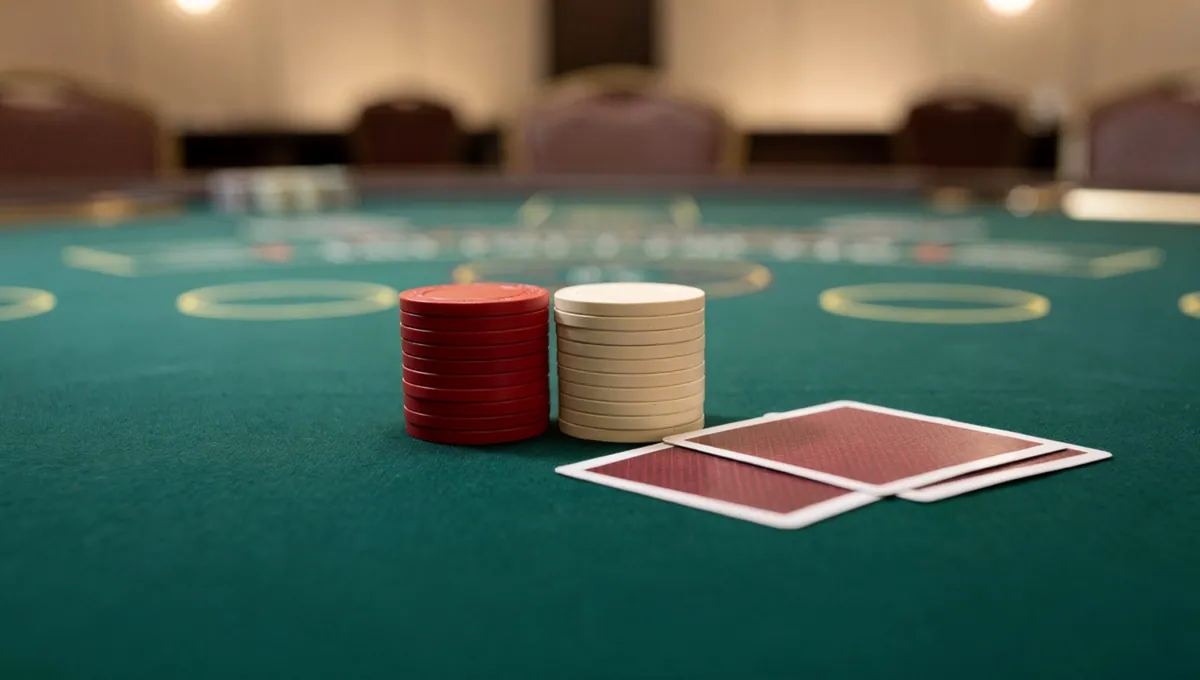
One group of wins sits outside all of this. Under IRC 871(j), no U.S. tax is imposed on non-business gambling winnings that a non-resident alien wins playing blackjack, baccarat, craps, roulette or the big-6 wheel in the United States. The rule applies to every non-resident, Canadians included, with no treaty involved.
Publication 515 says a W-8BEN is not required to get that exemption from withholding. It also says gambling income that is not subject to chapter 3 withholding is not reported on Form 1042-S. A big blackjack win is normally paid in chips at the table and cashed at the cage like any other chips.
These wins are not part of a U.S. refund claim at all. When a Canadian is asked for a W-8BEN, it is almost always for a hand-paid win on a slot machine, keno or a similar game, which is where the 30% applies. Our guide on why table games are not withheld like slots covers the difference game by game.
Where a Canadian claims the 30% back
The W-8BEN does not reclaim anything. The claim is made to the IRS on a U.S. return for non-resident aliens, filed for the tax year of the win. It reports the gambling winnings and the treaty loss deduction, with the casino’s 1042-S as proof of the tax withheld. U.S. Tax Recovery prepares and files this for you.
The treaty deduction allows losses from the same tax year to be set against the winnings, which can lower the U.S. tax actually owed below what the casino kept. The difference is what may be refunded. For tax years beginning after 2025, U.S. law allows only 90% of wagering losses as a deduction, so for a 2026 or later year the losses cannot remove all of the tax on the winnings. Our article on how gambling losses affect a refund works through the arithmetic.
A first claim usually needs an ITIN, an Individual Taxpayer Identification Number. U.S. Tax Recovery is an IRS Certifying Acceptance Agent, listed on the IRS’s Acceptance Agents directory for Canada. The IRS reviews the return and decides any refund.
What to keep from the day of the win
The paperwork from the cage is the starting point for any later claim, so it is worth keeping together. That means the payout receipt for each hand-paid win, a copy of the W-8BEN if the casino offers one, and any player’s card win-loss statement the casino can provide for the year.
Losses need support too. A casino win-loss statement is common support, but the IRS standard is an accurate diary or similar record of wins and losses, backed by receipts, tickets or statements. A record made at the time, with the date, the casino, the game and the amounts, carries more weight than a reconstruction made later.
Then there is the 1042-S itself. It is an annual form: the casino issues one per recipient, income type and tax rate for the year, and furnishes it by March 15 of the following year. If it does not arrive, the casino is the one to ask, since it issues the form. Matching each 1042-S against the payout receipts before anything is filed catches the most common mismatch early. Our documents checklist lists everything in one place.
Frequently Asked Questions
Does signing a W-8BEN at a casino stop the 30% withholding for Canadians?
No. The W-8BEN certifies that you are not a U.S. person, which tells the casino to report the win on Form 1042-S. It cannot reduce the tax for a Canadian resident, because the tax treaty between Canada and the U.S. lets the United States tax gambling winnings that arise there. The casino still withholds 30% on a hand-paid slot or keno win.
Why did the casino ask me for a W-8BEN instead of a W-9?
A W-9 is for U.S. persons and a W-8BEN is for foreign individuals. The casino needs one or the other before paying a large win by hand, so it knows which rules apply and which form to report the payment on. A Canadian resident who is not a U.S. citizen or resident gives the W-8BEN.
Should I put my Canadian tax number on the W-8BEN?
A tax identification number is only required on the form when a treaty benefit is being claimed. Canadians have no treaty exemption for gambling winnings, so the number does not change the withholding. Whether to give it is a matter between you and the casino, and the form’s instructions explain when a number is required.
Which countries do not pay U.S. tax on casino winnings?
IRS Publication 515 lists 25 countries whose residents’ gambling income is not taxable by the United States, including the United Kingdom, Germany, France, Ireland, Japan, Italy and Spain. Residents of Malta are taxed at 10%. Canada is not on the list, so Canadians are withheld at 30% and claim relief through a U.S. return instead.
Can I get the 30% back if I already signed a W-8BEN?
Signing it does not stand in the way of a later claim. The W-8BEN only documents foreign status at the time of payment. The refund claim is a separate step: a U.S. non-resident return for the year of the win, reporting the winnings and the treaty loss deduction, with the casino’s 1042-S as support. The IRS decides the outcome.
 Forms
 Treaty & losses