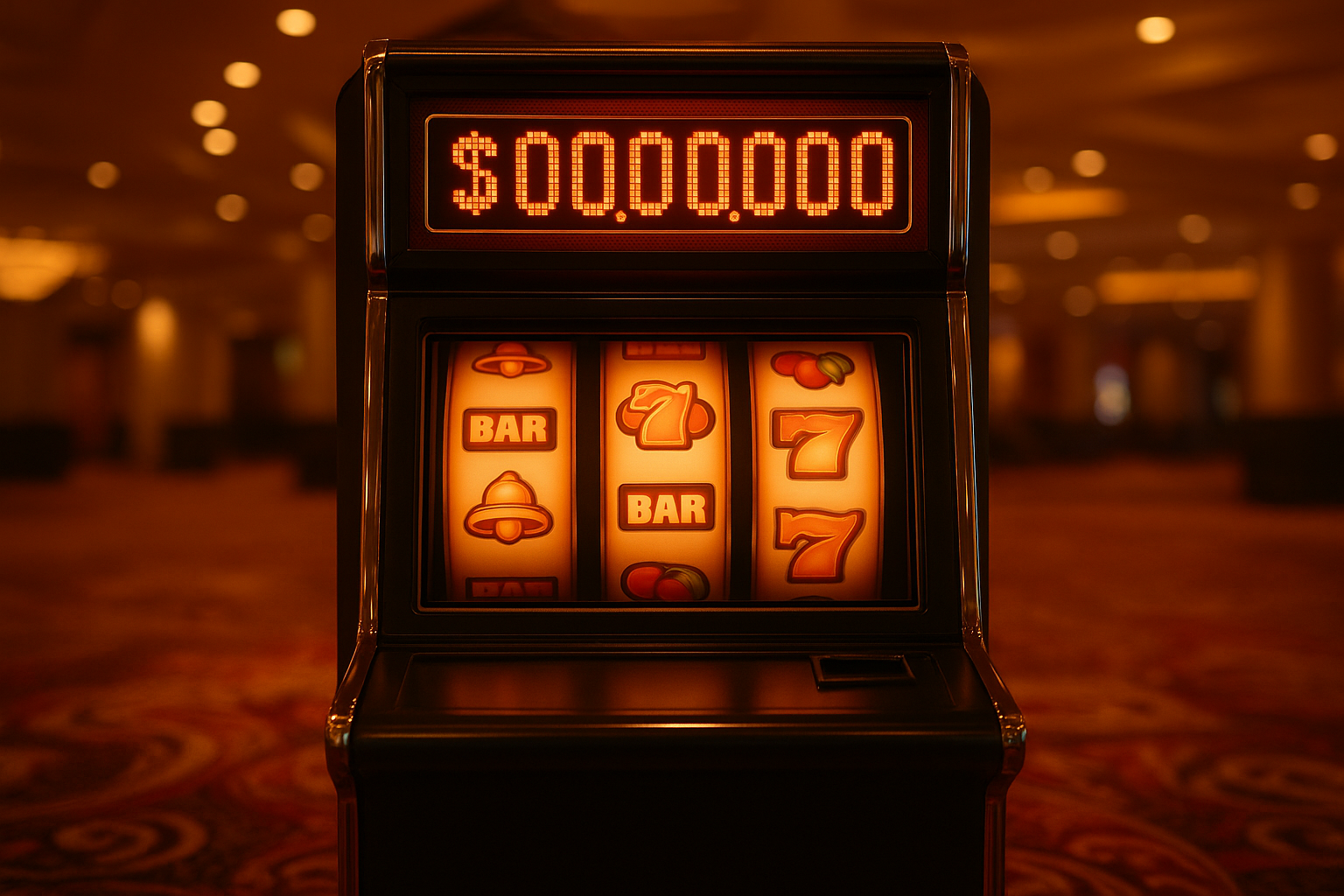
Slot machines decide every spin outcome using a random number generator (RNG) — a microprocessor that produces thousands of number combinations every second, even when nobody is playing. The moment you press the spin button, the RNG locks in a number, and that number maps to a specific reel position. The spinning animation you see is purely cosmetic; the result is already determined before the reels stop. No pattern, no hot streak, no “due” jackpot — every spin is statistically independent.
If you're a Canadian visiting a U.S. casino and you land a big win, the casino will withhold 30% of your winnings for the IRS before you ever see the money. At U.S. Tax Recovery, we recover that withheld tax on our clients' behalf, filing the correct IRS paperwork so you get back what you're owed under the Canada–U.S. Tax Treaty.
- Every slot spin outcome is set by an RNG the instant you press the button.
- Return-to-player (RTP) percentages tell you the long-run payout rate, not what you'll win today.
- Paylines, ways-to-win, and volatility all affect how often — and how much — a machine pays out.
- Progressive jackpots pool bets across machines or casinos, creating life-changing prizes.
- Canadian winners at U.S. casinos face 30% withholding; that money is recoverable.
The Random Number Generator: The Engine Inside Every Slot
The RNG is a chip that cycles through millions of number sequences per second, 24 hours a day. It uses a seed value — often derived from the exact millisecond the machine was powered on — to generate an endless, unpredictable stream of numbers. When you hit spin, the RNG freezes on whatever number it has reached at that precise microsecond.
Each number corresponds to a symbol position on each reel. A five-reel machine might have 50 possible stops per reel, giving 312 million possible combinations. The game's software maps specific number ranges to specific outcomes — a jackpot combination might be assigned only one number out of those millions, while a single-cherry payout might cover thousands of numbers.
This design means the casino cannot manipulate outcomes in real time, and neither can you. Rubbing the screen, using a player's card, or betting max coins does not influence the RNG. Regulatory bodies like Nevada's Gaming Control Board and Ontario's iGaming regulator audit RNG software regularly to confirm true randomness.
Return to Player (RTP): What the Percentage Really Means
RTP is the theoretical percentage of all wagered money a machine pays back to players over an extremely large number of spins — typically tens of millions. A slot with a 96% RTP will, in theory, return $96 for every $100 wagered across its lifetime.
RTP is not a session guarantee. You could sit down, play 200 spins, and walk away up 40% or down 100% — both outcomes are within normal variance. The 96% figure only becomes meaningful across the entire player base over months or years.
| Machine Type | Typical RTP Range | Notes |
|---|---|---|
| Classic 3-reel slots | 92% – 96% | Simpler math, fewer bonus features |
| Video slots (5-reel) | 94% – 97% | Most common in modern casinos |
| Progressive jackpot slots | 88% – 94% | Lower base RTP funds the jackpot pool |
| Penny slots | 85% – 92% | Lower denomination, lower return |
Paylines, Ways to Win, and Bet Structures
Early slot machines had a single payline — the horizontal row across the middle of three reels. Modern video slots have transformed this dramatically.
Fixed vs. Adjustable Paylines
A fixed payline machine always activates every line; you can't deselect them. An adjustable payline machine lets you choose how many lines to bet on, though betting fewer lines reduces your winning opportunities proportionally. Most casino advisors suggest always activating all paylines to avoid missing a winning combination you didn't pay for.
243 Ways, 1,024 Ways, and Megaways
Many modern slots abandon traditional paylines entirely in favor of a “ways to win” system. In a 243-ways game, any matching symbol on adjacent reels from left to right counts as a win — no specific line required. Megaways slots, licensed from Big Time Gaming, use a dynamic reel mechanic where each spin randomly assigns 2–7 symbols per reel, producing up to 117,649 ways to win on a single spin.
Volatility: How Slot Risk Profiles Work
Volatility (also called variance) describes how a slot distributes its payouts over time.
- Low volatility: Frequent small wins; bankroll lasts longer; jackpots are modest.
- Medium volatility: Balanced mix of win frequency and prize size; suits most players.
- High volatility: Long dry spells punctuated by large payouts; requires a bigger bankroll and patience.
Volatility is rarely printed on the machine itself, but game developers often disclose it in their promotional materials. Review sites and casino information pages are reliable secondary sources.
Progressive Jackpots: How the Big Numbers Build
A progressive jackpot grows because a small percentage of every qualifying bet — typically 1% to 3% — is siphoned into a shared prize pool. There are three main structures:
- Standalone progressive: Only one machine feeds the jackpot. Prize grows slowly.
- Local progressive: A bank of machines within one casino shares the pool. Faster growth.
- Wide-area (networked) progressive: Machines across multiple casinos or states feed one jackpot. This is how prizes like Megabucks reach $10 million+.
To qualify for the top prize, most progressives require a maximum bet. Always read the machine's pay table — usually accessible via a “Help” or “Info” button — before playing.
Bonus Rounds, Free Spins, and Scatter Symbols
Modern video slots layer additional mechanics on top of the base game to extend play and add excitement. Common features include:
- Scatter symbols: Pay anywhere on the reels, regardless of paylines; usually trigger free spins.
- Wild symbols: Substitute for most other symbols to complete winning combinations.
- Free spins: A set number of spins at no additional cost, often with multipliers applied.
- Pick-a-prize bonus: A second-screen game where you select items to reveal instant cash prizes.
- Cascading reels: Winning symbols disappear and new ones fall in, allowing chain wins from a single spin.
Bonus rounds are also governed by the RNG. The outcome of a free-spin round is determined the moment it triggers — the animations simply reveal a pre-set result.
Why Filing a U.S. Tax Refund Claim Alone Is Harder Than It Looks
Recovering withheld U.S. gambling tax requires an Individual Taxpayer Identification Number (ITIN), a correctly completed IRS Form W-7, certified identity documents, and a Form 1040-NR nonresident return filed with the IRS. A single error — a mismatched name, missing certification, or wrong treaty article — can result in rejection or months of delay. As a Certified Acceptance Agent, U.S. Tax Recovery verifies your identity documents in-house, eliminating the need to mail original passports to the IRS, and handles every form on your behalf.
The 30% Withholding Tax on U.S. Slot Winnings
When a Canadian wins $1,200 or more on a slot machine at a U.S. casino, the casino is legally required to withhold 30% of the gross winnings for the IRS before paying out. On a $5,000 jackpot, that's $1,500 kept by the IRS before you leave the casino floor. The threshold applies per win event, not per session or per day.
Under the Canada–U.S. Tax Treaty, Canadian residents can offset that withholding against documented gambling losses from the same U.S. trip, potentially reducing the taxable amount significantly. Recovering the withheld funds requires filing a 1040-NR return with the IRS and receiving a Form 1042-S from the casino. Contact U.S. Tax Recovery to find out how much you could get back.
Frequently Asked Questions
Can a slot machine be “due” for a jackpot?
No — because every spin is decided independently by the RNG, a machine has no memory of past results. A slot that hasn't paid a jackpot in six months has exactly the same odds on the next spin as it did on day one. The idea of a “due” machine is a cognitive bias called the gambler's fallacy.
Does betting maximum coins improve my odds on a slot?
Max bets don't change the RNG outcome probabilities, but on many machines — especially progressives — the top jackpot is only accessible when you bet the maximum. On non-progressive machines, betting max simply increases the size of each payout proportionally without improving the underlying odds of winning.
What is the difference between RTP and the house edge?
RTP and house edge are two sides of the same coin. A slot with 96% RTP has a 4% house edge — meaning the casino expects to keep $4 of every $100 wagered over time. Higher RTP means a lower house edge and, theoretically, better long-run value for the player.
Won Big at a U.S. Casino? Let's Get Your Money Back.
If a U.S. casino withheld 30% of your slot winnings, you may be entitled to a refund under the Canada–U.S. Tax Treaty. U.S. We prepare your 1042-S review and 1040-NR filing from start to finish.
Disclaimer: This article is for general informational purposes only and does not constitute tax, legal, or financial advice. Tax rules change frequently; consult a qualified tax professional regarding your specific situation. U.S. Tax Recovery services are subject to individual eligibility.