Keno Odds: What the Numbers Actually Mean
Keno odds are set by the casino and vary based on how many numbers you pick and how many of those numbers match the draw. The more numbers you select, the harder it becomes to match them all — but the potential payout grows to compensate. Understanding this tradeoff is the foundation of playing keno with realistic expectations.
When a Canadian player wins $1,500 or more at a U.S. casino keno game, the casino is required to withhold 30% of that amount before paying out. At U.S. Tax Recovery, we help Canadian clients recover some or all of that withheld tax by filing the correct IRS paperwork on their behalf.
KEY TAKEAWAYS
- Keno odds depend on how many spots you pick and how many match the draw — the house edge is typically higher than most casino table games.
- U.S. casinos withhold 30% of keno winnings of $1,500 or more paid to Canadian and other non-resident players.
- Canadian players receive Form 1042-S documenting the withholding — not Form W-2G, which applies to U.S. residents.
- Article XXII(3) of the Canada–U.S. Tax Treaty allows Canadians to offset documented gambling losses against their winnings in the same year.
How Keno Works
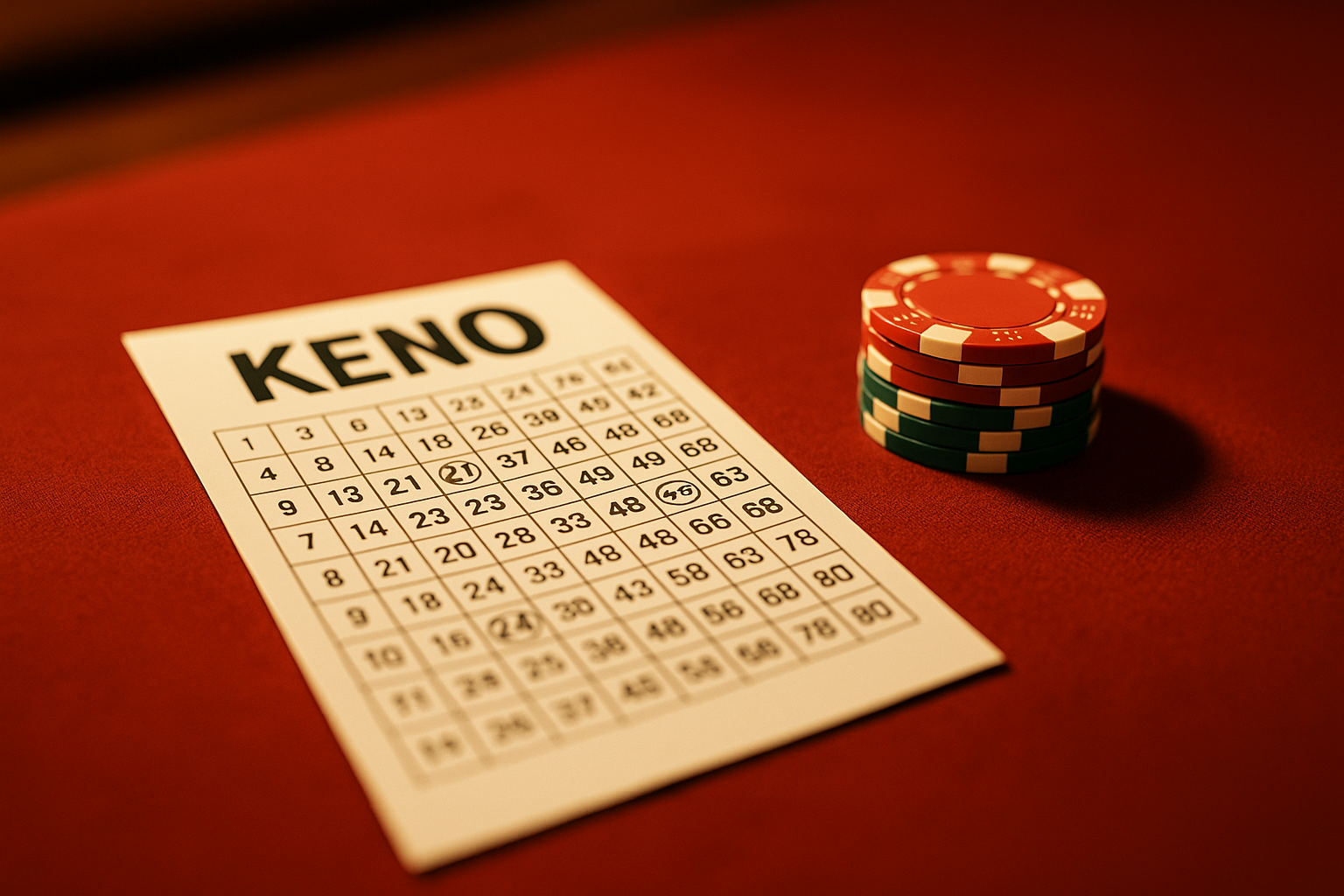
Keno is a lottery-style game found in most major U.S. casinos. A player selects between one and twenty numbers from a field of eighty. The casino then draws twenty numbers at random. Your payout depends on how many of your chosen numbers match the drawn numbers — called “catches” — and how many spots you originally selected.
Each casino sets its own pay table, which is why the same number of catches can pay differently from one property to the next. Before you play, it is worth checking the pay table posted at the keno lounge or printed on the ticket. The game moves at a relaxed pace compared to slots or table games, which suits players who prefer a lower-intensity session.
Spots, Catches, and Payouts
The terminology in keno is straightforward once you know it. A “spot” is a number you pick. A “catch” is a spot that matches a drawn number. Casinos typically require a minimum number of catches before any payout occurs, and the top prizes require catching all or nearly all of your selected spots.
Picking fewer spots gives you a better chance of catching all of them, but the maximum payout is smaller. Picking more spots dramatically increases the top prize but makes a full catch far less likely. Most recreational players pick between four and eight spots, which balances win frequency against payout size.
What Is the House Edge in Keno?
The house edge in keno is the percentage of every dollar wagered that the casino expects to keep over a large number of games. Keno generally carries one of the higher house edges among casino games — often ranging from around 20% to 35% depending on the property and pay table, though this varies widely.
By comparison, many table games carry house edges well below 5%. This does not mean keno is a poor choice for entertainment, but it does mean your money tends to last a shorter time per dollar wagered than at most other games. Keno suits players who enjoy a slow, relaxed format and are comfortable with the tradeoff.
Return to Player and Keno Pay Tables
The Return to Player (RTP) is the flip side of the house edge — it represents the percentage of wagered money the game pays back over time. A game with a 25% house edge has an RTP of 75%, meaning for every $100 wagered across many games, the casino pays back $75 in prizes on average.
Because keno pay tables vary so much between casinos, it pays to compare them before committing to a session. Some casinos publish their keno pay tables online. A more generous pay table on a specific spot count can meaningfully reduce the effective house edge.
Keno Odds at a Glance
| Spots Picked | Catches Needed for Top Prize | General Difficulty |
|---|---|---|
| 1 | 1 | Easiest — roughly 1 in 4 chance |
| 4 | 4 | Moderate — several hundred to one |
| 8 | 8 | Difficult — tens of thousands to one |
| 10 | 10 | Very difficult — millions to one |
These ranges are approximate. Exact odds depend on the specific casino's rules and the number of spots drawn. The pay table at your casino will show the precise payouts for each catch level.
Tips for Playing Keno With Realistic Expectations
Keno is a game of pure chance. No system, pattern, or number selection strategy changes the underlying odds — every draw is independent of every previous draw. Players who track “hot” or “cold” numbers are observing random variation, not a real pattern the casino has programmed.
- Set a session budget before you begin and treat it as entertainment spending.
- Compare pay tables between casinos if you play at multiple properties — the differences can be significant.
- Picking fewer spots gives you more frequent small wins; picking more spots gives you a shot at a larger prize with lower win frequency.
- Use a player's rewards card every time you play — it records your activity and creates documentation that can matter at tax time.
That last point matters more than many players realize. If you ever need to substantiate gambling losses for a U.S. tax refund claim, a win-loss statement from the casino is one of the most accepted forms of documentation. Untracked play produces no statement and cannot be claimed. You can learn more about how a casino win-loss statement works on a U.S. tax return in our dedicated guide.
Why Filing Your Refund Claim Alone Is Harder Than It Looks
If you win $1,500 or more at a U.S. keno game, the casino withholds 30% before paying you. Recovering that amount means filing IRS Form 1040-NR — the U.S. Non-Resident Alien Income Tax Return — with the correct treaty citation, a reconciled Form 1042-S, and a valid Individual Taxpayer Identification Number (ITIN).
Our team handles these filings regularly and knows exactly what the IRS expects at each step. We verify your passport in our office — so you never have to mail your original passport to the IRS and wait weeks without it. You can review our complete refund process from start to finish to see how each piece fits together.
The 30% Withholding Tax on U.S. Keno Winnings
When a Canadian player wins $1,500 or more from a single keno game at a U.S. casino, the IRS requires the casino to withhold 30% of the gross amount before paying out. On a $3,000 keno win, that is $900 remitted directly to the IRS. The casino issues a Form 1042-S — not a Form W-2G — documenting the withholding. That form is the starting point for a refund claim.
Article XXII(3) of the Canada–U.S. Tax Treaty allows Canadian residents to offset documented gambling losses from the same tax year against their U.S. gambling winnings. This can reduce the taxable amount significantly — in some cases to zero — meaning a full or partial refund of the withheld tax may be possible depending on your documented losses. The treaty benefit is never applied automatically; it must be claimed correctly on Form 1040-NR. If you have a Form 1042-S from a keno win, contact us to start your assessment.
Frequently Asked Questions
Does picking more keno numbers improve my chances of winning?
Picking more numbers increases the size of the top prize but makes it harder to catch all your spots. Your chance of winning something may increase slightly at lower catch levels, but your chance of hitting the top prize decreases sharply. There is no number count that consistently beats the house edge — the pay table determines the math.
Can a Canadian get back the 30% withheld from a keno win?
Yes, potentially. Canadian residents can file a U.S. non-resident return using Form 1040-NR and claim the treaty benefit under Article XXII(3) of the Canada–U.S. Tax Treaty. Documented gambling losses from the same year can offset the winnings, which may reduce or eliminate the tax owed and generate a refund of some or all of the amount withheld.
What form does a U.S. casino issue to a Canadian keno winner?
A U.S. casino issues Form 1042-S to a Canadian player when it withholds tax from a keno win. This is different from Form W-2G, which applies to U.S. residents. The 1042-S shows the gross winnings and the amount withheld. You can learn more about what Form 1042-S shows and how to use it in our guide.
Won at Keno in the U.S.? Let's Recover What Was Withheld.
If a U.S. casino withheld 30% of your keno winnings, you may be entitled to recover some or all of that amount through the Canada–U.S. Tax Treaty. U.S. We prepare your 1042-S review, 1040-NR filing, and complete treaty claim from start to finish.
Disclaimer: This article is for general informational purposes only and does not constitute tax, legal, or financial advice. Tax rules change; consult a qualified tax professional regarding your specific situation. U.S. Tax Recovery services are subject to individual eligibility.