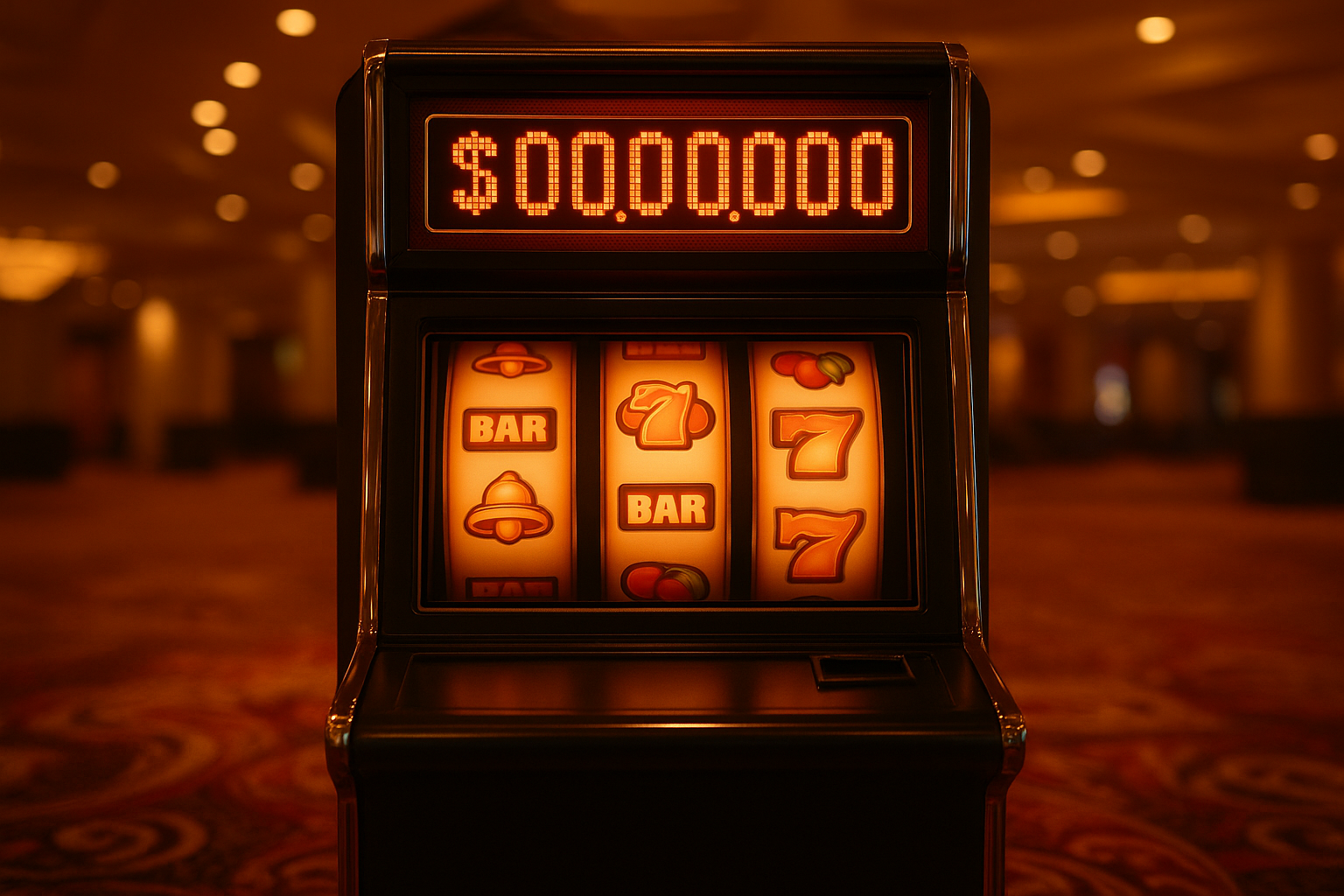

How Slot Machines Work: RTP, Odds, and What Every Casino Player Should Know
Slot machines are controlled by a Random Number Generator — a microchip that produces thousands of random number combinations every second, even when the machine is not being played. When you press spin, the RNG freezes on a combination at that exact millisecond, and the reels simply display the result that has already been determined. There is no memory of past spins, no hot or cold streaks, and no way to predict or influence the outcome. Every spin is statistically independent.
If you are a Canadian visiting a U.S. casino and you land a significant jackpot, the IRS requires the casino to withhold 30% of your winnings before you ever leave the building. At U.S. Tax Recovery, we recover that withheld tax on behalf of our clients — so keep reading, because the mechanics of how you won matter less than knowing you can get that money back.
KEY TAKEAWAYS
- Every spin outcome is decided by a Random Number Generator the instant you press the button.
- RTP (Return to Player) tells you the long-run payout percentage, but it never guarantees short-term results.
- Volatility determines how often and how large payouts tend to be on a given machine.
- Canadian players can reclaim the 30% U.S. withholding tax on qualifying slot jackpots.
What Is a Random Number Generator?
A Random Number Generator (RNG) is the engine behind every modern slot machine. It is a computer algorithm that continuously cycles through billions of number sequences per second, assigning each sequence to a specific reel position or symbol combination. The moment you press spin — or pull the lever on a classic machine — the RNG locks in a number, and the outcome is set before the reels even start moving.
This is a critical point: the spinning reels are purely visual. They are an animation designed to create suspense. The result was already decided the instant you initiated the spin. Casinos are required to have their RNG software independently certified to prove it produces genuinely random outcomes, which is part of how gaming regulators protect players.
Does Timing Your Spin Matter?
No. Because the RNG cycles thousands of times per second, pressing the button a half-second earlier or later produces a completely different number. There is no pattern to exploit and no “right moment” to spin. Strategies built around timing — or around watching a machine that “hasn’t paid in a while” — have no mathematical basis.
What Does RTP Actually Mean?
RTP stands for Return to Player, and it is the percentage of all wagered money a machine is programmed to pay back over a very large number of spins — typically millions.
For example, a machine with a 96% RTP will, in theory, return $96 for every $100 wagered across its entire lifetime of play. That does not mean you will get $96 back from your $100 session. RTP is a statistical average calculated over an enormous sample size, not a session-by-session promise. In any single visit, you could win big, lose everything, or land somewhere in between.
Typical RTP Ranges by Machine Type
| Machine Type | Typical RTP Range | Notes |
|---|---|---|
| Penny slots | 85% – 90% | Lower RTP, higher volume of spins |
| Standard video slots | 92% – 96% | Most common floor machines |
| High-limit slots | 95% – 98% | Higher denomination, better returns |
| Progressive jackpot slots | 85% – 93% | A portion of every bet feeds the jackpot pool |
Understanding Volatility and Hit Frequency
Two concepts that matter more to your session experience than RTP alone are volatility and hit frequency.
Volatility (also called variance) describes the risk profile of a machine:
- Low volatility: Pays out smaller amounts more frequently. Your bankroll stays relatively stable, but big wins are rare.
- Medium volatility: A balance between payout size and frequency. Common on standard video slots.
- High volatility: Long dry spells punctuated by potentially large payouts. Progressive jackpot machines are typically high volatility.
Hit frequency is simply how often a spin produces any winning combination, expressed as a percentage. A machine with a 25% hit frequency pays something on roughly one in four spins — but “something” can be less than your original bet, so a win in name is not always a win in practice.
How Paylines and Reels Affect Your Odds
Classic three-reel slots have a simple structure: a small number of symbols, a handful of paylines, and straightforward math. Modern five-reel video slots are far more complex. They can feature anywhere from 10 to over 1,000 ways to win, bonus rounds, multipliers, cascading reels, and wild symbols — all of which affect the probability calculations built into the machine.
More paylines do not automatically mean better odds of a profitable session. What they do is create more opportunities to land a winning combination on any given spin, while the RTP and volatility settings determine the actual payout math behind those combinations. A machine with 243 ways to win can still have a lower RTP than a simple 9-line machine.
Progressive Jackpots: How the Pool Builds
Progressive jackpot machines are linked — either within a single casino or across a network of casinos — so that a small percentage of every bet placed feeds a shared prize pool. This is why progressive jackpots can grow into the millions. The trade-off is that the base-game RTP is lower than a non-progressive machine of the same denomination, because a portion of every wager is being diverted to the jackpot pool rather than returned in regular payouts.
When a player finally hits the jackpot, the pool resets to a seed amount and the accumulation begins again. The odds of hitting a major progressive jackpot are extremely long — often comparable to lottery odds — but the potential payout is correspondingly large.
Why Filing a U.S. Tax Refund Claim Alone Is Harder Than It Looks
Canadian players who win a jackpot and have 30% withheld often assume the refund process is a simple form submission. In practice, it involves obtaining an Individual Taxpayer Identification Number (ITIN) if you do not already have one, filing a U.S. nonresident tax return, correctly applying the Canada-U.S. Tax Treaty, and corresponding with the IRS — which can take many months. A single error in the paperwork resets the clock. Working with a specialist who handles these filings daily means fewer errors, faster processing, and no guesswork about whether you are leaving money on the table.
The 30% Withholding Tax on U.S. Slot Winnings
Under U.S. tax law, casinos are required to withhold 30% of gambling winnings paid to nonresident aliens when a win meets certain thresholds. For slot machines, the withholding threshold is $1,200 or more from a single jackpot. At that point, the casino issues a Form W-2G, retains 30% of the gross win, and remits it directly to the IRS before you receive your payout. On a $5,000 jackpot, that is $1,500 withheld on the spot.
The Canada-U.S. Tax Treaty allows Canadian residents to offset gambling losses against gambling winnings when filing a U.S. nonresident return, which can reduce or eliminate the taxable amount and generate a refund of some or all of the withheld tax. The key is filing correctly and on time. If you have had U.S. tax withheld on a slot win, contact us today to find out how much you may be entitled to recover.
Frequently Asked Questions
Can a slot machine be “due” for a jackpot?
No. Because every spin is determined by an RNG with no memory of previous results, a machine that has not paid a jackpot in a long time is statistically no more likely to pay one on the next spin. Each spin carries exactly the same odds as every other spin, regardless of recent history.
Does betting maximum coins improve my odds?
On most modern video slots, betting max activates all paylines and makes you eligible for the top jackpot, which you would otherwise miss on a reduced bet. It does not change the RTP percentage itself. On some older machines, the top jackpot payout per coin wagered is proportionally higher on a max bet, so check the pay table before choosing your bet level.
How long does it take to get a U.S. tax refund on slot winnings?
The IRS typically processes nonresident gambling refund claims within six to nine months of receiving a complete return, though timing varies. Delays often stem from ITIN applications or paperwork errors. Filing with an experienced agent who specializes in these returns generally produces the fastest and most accurate outcome.
Don’t Leave Money on the Table
Get expert help with your tax recovery today. Our team is ready to recover the amount you’re entitled to.
This article is general information, not tax advice. Individual circumstances vary.